Google Analytics
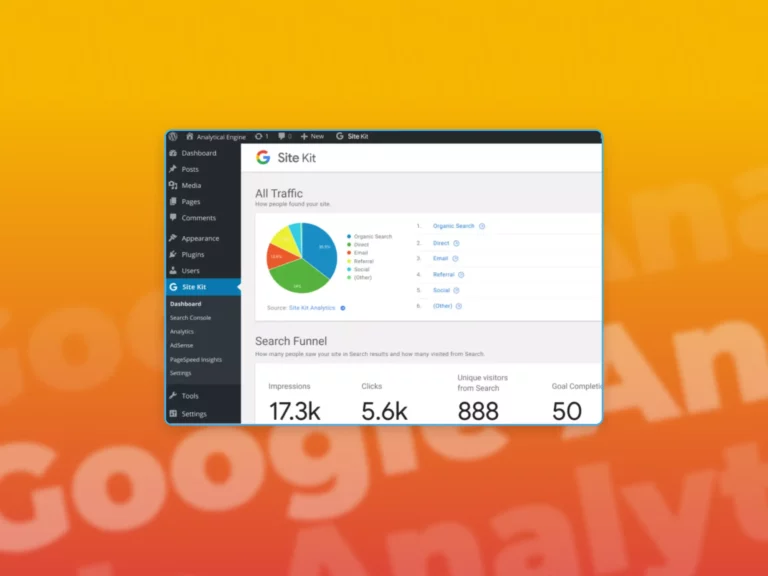
Digital growth without measurement introduces risk. Decisions about marketing investment, user experience, and acquisition channels require reliable behavioral data.
Google Analytics is a web and app measurement platform that tracks user interactions, traffic sources, engagement patterns, and conversion events. It provides structured insight into how users discover, navigate, and interact with digital properties.
At a strategic level, Google Analytics is not reporting software. It is a behavioral data layer within the broader digital architecture.
What the technology is?
Google Analytics, currently centered on Google Analytics 4 (GA4), is an event-based analytics platform that records user interactions across websites and applications.
Unlike earlier session-based models, GA4 tracks events such as page views, clicks, scroll depth, purchases, form submissions, and custom-defined actions. It integrates with advertising platforms, CRM systems, ecommerce engines, and consent management tools.
It is designed to provide cross-device tracking, predictive metrics, and advanced audience modeling when properly configured.
What problem it solves?
Without structured analytics:
- Marketing investment lacks attribution clarity
- Conversion bottlenecks remain unidentified
- Traffic growth cannot be tied to revenue
- Campaign performance becomes speculative
- UX improvements rely on assumptions
Google Analytics addresses the visibility problem. It transforms anonymous traffic into structured behavioral insight.
What it enables?
When architected correctly, Google Analytics enables:
- Identification of high-performing acquisition channels
- Full-funnel user journey analysis
- Conversion event tracking tied to revenue outcomes
- Audience segmentation for remarketing
- Behavioral flow analysis to identify drop-off points
- Data-driven optimization of content and landing pages
For service businesses, ecommerce platforms, and multi-channel organizations, this creates measurable accountability across marketing and digital operations.
When it is the right choice?
Google Analytics is appropriate when:
- The organization invests in digital acquisition
- Conversion measurement is commercially important
- Multiple traffic channels need attribution
- Marketing budget allocation requires validation
- Long-term performance optimization is a priority
It is especially relevant for growth-focused businesses where marketing spend must be justified by measurable outcomes.
When it may not be the right choice?
Google Analytics may be insufficient on its own when:
- Advanced server-side tracking is required
- First-party data governance must be tightly controlled
- Highly regulated industries demand stricter data residency
- Enterprise-level data warehousing is necessary
In more complex environments, Google Analytics should integrate with broader data infrastructure rather than operate in isolation.
Why we recommend it?
We recommend Google Analytics when it is implemented as a structured measurement framework, not as a default installation.
Effective analytics requires:
- Clear event modeling
- Defined conversion logic
- Proper tag management
- Consent-aware configuration
- Integration with advertising platforms
- Alignment with CRM or revenue systems
Poor implementation produces misleading data. Accurate configuration produces strategic clarity.
Future perspective
Analytics is shifting toward privacy-aware measurement and first-party data modeling. Browser restrictions and regulatory pressure require more disciplined tracking approaches.
GA4’s event-based model supports predictive audiences and machine learning optimization, but only when conversion signals are accurate.
Future-ready analytics depends on:
- Server-side tagging where appropriate
- First-party data alignment
- Structured event architecture
- Consent-compliant configuration
Measurement maturity is becoming a competitive differentiator.
Our role as experts
Google Analytics implementation is often underestimated. Correct setup requires both technical and strategic alignment.
Our work typically includes:
- Defining measurement objectives
- Designing event tracking architecture
- Implementing through tag management systems
- Configuring enhanced ecommerce or lead tracking
- Aligning analytics with paid media platforms
- Integrating CRM or backend conversion data
- Ensuring compliance with GDPR and regional regulations
We approach analytics as a decision-support system. Configuration is only the starting point. Data integrity and interpretability determine long-term value.
Business impact
When implemented correctly, Google Analytics contributes to:
- Clear acquisition cost visibility
- Improved marketing ROI accountability
- Identification of conversion bottlenecks
- Better content and UX optimization
- More disciplined budget allocation
- Stronger forecasting accuracy
The outcome is informed decision-making supported by structured behavioral data.
Google Analytics should not be viewed as a reporting dashboard. It is a measurement infrastructure that underpins digital growth. When engineered with clarity and governance, it becomes a core component of revenue strategy.
Projects









Schedule a discovery call and tell us about your project