Freediving
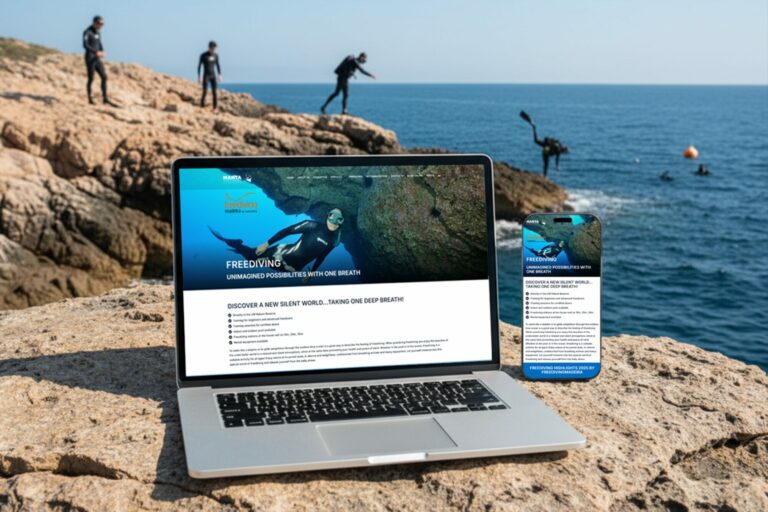
Freediving earns real respect worldwide. Not just for the thrill, but for the trust, skill, and life-changing experiences it brings. Freediving platforms today often manage course schedules, certification paths, equipment requirements, and safety briefings, making them essential tools for both beginners and advanced divers searching for reliable information.
These days, a lot of that starts online. Freediving platforms connect people to top-tier training, experienced guides, active communities. If you’re building or checking out freediving websites, three things matter most: clarity, reliability, and genuine connection.
What makes a great freediving website?
Smooth Onboarding for Every Diver
Simple navigation, welcoming visuals, clear next steps. Whether someone wants a first course or advanced training, they should instantly see where to start and what to expect. This includes clear pathways for Level 1, Level 2, and advanced apnea training.
Simple, Reliable Booking and Communication
Nobody likes complicated registration. Smooth enrollment, easy questions, quick gear coordination. Fast, reliable systems keep visitors engaged instead of frustrated. Most freedivers book courses last-minute while traveling, so fast mobile booking matters.
Transparency on Training, Safety, and Options
Vague descriptions kill trust. Strong sites offer honest explanations about training levels, medical requirements, what to bring. Clear pricing and equipment details build credibility. Sites that outline safety standards (AIDA, SSI, Molchanovs) instantly boost trust.
Expertise that’s Proven, Not Claimed
Anyone can claim expertise, best sites prove it. Instructor profiles, certifications, track records. Real knowledge and visible credentials reassure people they’re in safe hands. Certification bodies, instructor depth records, and teaching hours help visitors validate credibility quickly.
Real Stories and Community
Authentic testimonials and actual photos from courses convince people. Stories from freedivers of all backgrounds, community galleries and real session photos improve authenticity and reduce hesitation for first-time divers.
Ongoing Support, Guidance, and Updates
Questions don’t end when courses do. Best sites offer ongoing support, educational content, updates about events and training opportunities, keeping people connected.
Resources That Make a Difference
Guides on equalization, breath-hold techniques, recovery protocols, and marine life awareness help the site rank for educational intent. Useful educational content brings people back even after their first experience.
Mobile Accessibility
Most people book through phones. Strong sites work smoothly on any device. Mobile-first design is standard, more than 70% of freediving bookings originate from mobile devices.
An outstanding freediving website merges transparency, expertise, and accessibility. It doesn’t just sell a course or a dive, it builds empowered, confident communities who return again and again, trust the instructors, and share their experiences with others.
The main idea
When these elements merge, the site supports both recreational freedivers and practitioners training toward deeper performance goals.
That’s how digital agencies and freediving pros together help grow the sport, designing platforms that inspire, educate, and connect everyone to the silent, spectacular world below the waves.
Projects
Schedule a discovery call and tell us about your project